
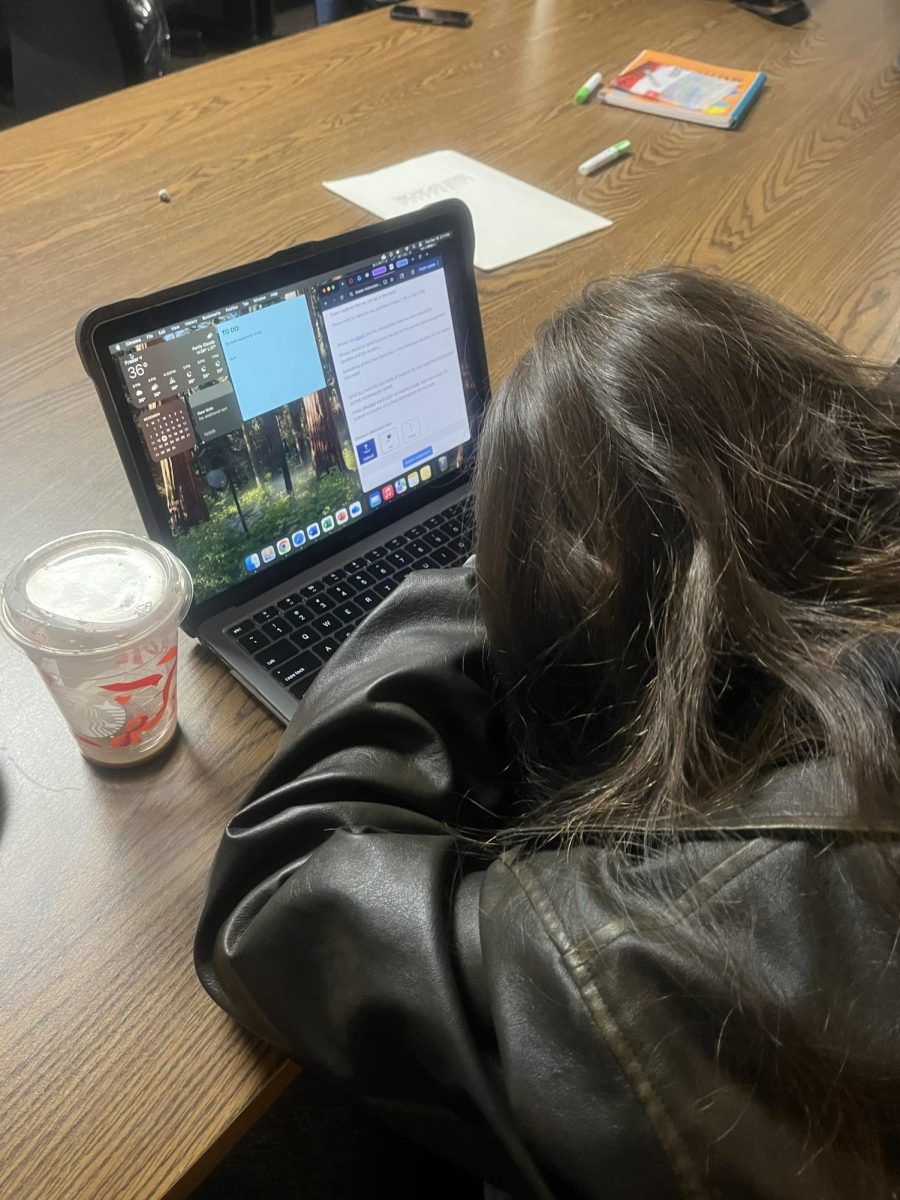
Students falling asleep during first block, energy drinks lining desks, and kids showing up to school in pajamas personify the average students sleep schedule. Sleep is one of the most important things for a kid as the body rebuilds and grows. Sleep regenerates cells in the body, strengthens immune systems, and improves someone’s overall health. However, students seem to rarely get enough of it. There is a rising concern for why kids cannot get enough sleep and questions on how it impacts their performance in school.
According to Weill Cornell Medicine, during the teenage years, sleep benefits the brain’s development and function which increases their attention spans and well-being. Their ability to focus is enhanced, and they are more likely to do better in school. Also, teenagers are biologically programed to go through a natural shift in their circadian rhythm around this age that causes them to naturally fall asleep past 11 p.m. and wake up later. Now, the recommended amount of sleep for teens is around 8 to 10 hours per night. That is the proposed amount to maintain good health. However, when looking at teenagers in a formal high school setting, it becomes nearly impossible for the average student to get enough sleep every night. Between a changing circadian rhythm, extracurriculars, and homework, teens end up staying up later and later each night.
A random 365 students from Fraser were polled on their sleeping habits. Out of these 365 students, 77.5% said they often feel exhausted. And students are getting on average of 6 hours of sleep per night, with over 50 students reporting that’s how much sleep they get every night. 6 hours is well below the recommended amount of sleep teenagers should be getting, especially long term. Of the students polled, the least amount of sleep recorded was 1-4 hours, with a few students stating they get 2-3 hours of sleep per night. Another interesting pattern is that students who do report getting around 8 hours of sleep per night tend to be underclassmen, with mainly 9th and 10th grade students stating they get enough sleep per night. Compared to the students that are getting 7 hours or less per night were mainly upperclassmen. 
Furthermore, while there are students getting enough sleep every night, those students are still reporting feeling exhausted. Out of the 365 students that were polled, only 17.5% claimed to get more than 8 hours per night. Of those students, 73.4% said they still feel exhausted. Evidently, the sleep they are getting is still not enough to sustain them through the school day. The data is also not considering the difference between sleep needed for males versus females. Females need more sleep than the average male.
Local family medicine and psychiatry doctor, Stephen J. Warnick, gave a possible explanation for why children are exhausted after not getting enough sleep.
“Sleep affects all of your body functions. It helps your body reset for the next day. There are important hormones released. For instance, for adolescence who are growing this is when growth hormone is released so if you don’t sleep properly, it could actually affect your growth,” Dr. Warnick said.
Basically, if someone is not getting enough sleep their body is unable to grow and reset. Sleep also plays a role in memory reconsolidation meaning that students attention spans are even more limited. Other factors mix with a lack of sleep to accumulate for students to struggle during the school day.
“Due to stress, sleeping issues, and late nights of homework, I found myself turning to melatonin use at the late night hours. This made me susceptible to sickness easier, and develop a reliance on melatonin,” Senior, Carolanne Hammer, said.
Then, moving on to the rising caffeine intake in high school students. Now, from the students polled majority actually claimed that they do not drink caffeine regularly. With 63.8% claiming they do not drink caffeine regularly. However, the students that reported feeling exhausted almost all reported that they regularly drink caffeine. Out of the 132 students that said they consume caffeine, only 19 said they do not feel tired often. And of the students that reported their caffeine consumption people are averaging around 200mg per day. One student even reported having 2 energy drinks per day which can be anywhere from 200-400mg. The American Medical Association reports that the FDA says less than 400 mg of caffeine per day is safe for the average adult, but not the average child or teenager. They also state how caffeine can cause heart problems, like increasing blood pressure and messing with the heart’s natural rhythm. There are also connections of caffeine to lowering the amount of sleep people get. Everything connects back to how teens are not getting enough sleep, with caffeine being one of those factors.
Most teenagers’ choice of caffeine is through energy drinks; however, the American Medical Association states how most caffeine dangers come through energy drinks and other caffeine supplementals. John Hopkin’s Medicine reports how due to the brain still developing, children and teens are more susceptible to the risks of caffeine consumption. There are a multitude of health and mental problems that can occur when a child has too much caffeine. So, not only are teenagers not getting enough sleep generally, but the students also that participate in caffeine consumption are doubling the chance of negatively impacting their health. But again, from extracurriculars to homework to biological changes that people cannot control, students are struggling to be able to get enough sleep whether they cover it up with caffeine or not.
Senior, Madeline Cole, is a prime example of a student with a busy schedule.
“Usually, I wake up around 6:45 and leave for school around 7:00 and get to school around 7:20. After school, I go home and get ready for 30 minutes and leave for dance at 4:15. And then I’m at dance from 4:15 to 9:00. And if I have a lot of homework, I won’t get done with it until around 11:30 and if it gets to that point I try to call it quits,” Cole said.
On top of school, there are outside stressors that impact a student’s ability to get a good night’s rest which has a layer of irony to it as sleep is meant to recover from things like stress and illness.
“Sleep is also when your body repairs itself from all of the stresses that is taken throughout the day. Sleep is also an important time for your brain to work on your memories so a lack of sleep can actually make it harder for you to remember what you did during the day,” Dr. Warnick said.
Extracurriculars, homework, jobs outside of school, volunteering, and other outside stressors all contribute to students having compromising sleep schedules. If a student does not get enough sleep, then they cannot ponder properly in school. Sleep is needed so students can be at their maximum focus during school. Without sleep, the body will breakdown and not be able to recover. Sleep consolidates the brain’s memories and fights sickness. It seems as though the importance of sleep has been lost as it never seems to be prioritized by kids and adults alike. There is no true way to fix a sleep schedule, but it is up to a student to recognize what works for them and what does not. There are things that can be recommended like no screens before bed and no caffeine, but every person is different and ultimately, it is up to them to figure out what works for them.
Sources:
https://pmc.ncbi.nlm.nih.gov/articles/PMC2528821/
https://www.ama-assn.org/public-health/prevention-wellness/what-doctors-wish-patients-knew-about-impact-caffeine#:~:text=%E2%80%9CThe%20Food%20and%20Drug%20Administration,cups%20of%20coffee%20a%20day.%E2%80%9D
https://www.hopkinsmedicine.org/health/wellness-and-prevention/energy-drinks-and-kids