People globally are affected by the conflict in the Gaza Strip. However, not everyone actually knows what is going on in this territory.
Gaza is a Palestinian territory– but not an official country– along the Mediterranean coast bordered by Egypt and Israel. The territory was held by Israel from 1967-2005. Since then, Gaza has been governed by the National Palestinian Authority.
On October 7th, 2023, a rebellion organization based in Gaza called Hamas launched a series of attacks on Israel. This started the ongoing conflict we see today. Israel retaliated by targeting the entire Gaza strip and a territory called West Bank, and has continued to do so for over two years straight.
Hostages have also been a huge issue on both ends; they are refusing to return hostages until an official deal has been made. Other countries have attempted to step in and provide aid for homeless and starving Palestinians, but this has continuously been blocked by Israeli forces.
According to CNN, there is almost nothing left in the Gaza Strip at this time, just rubble and broken hearts. The Palestinian death toll is over 67,000. There have been brief ceasefire agreements, but none of them seem to last.
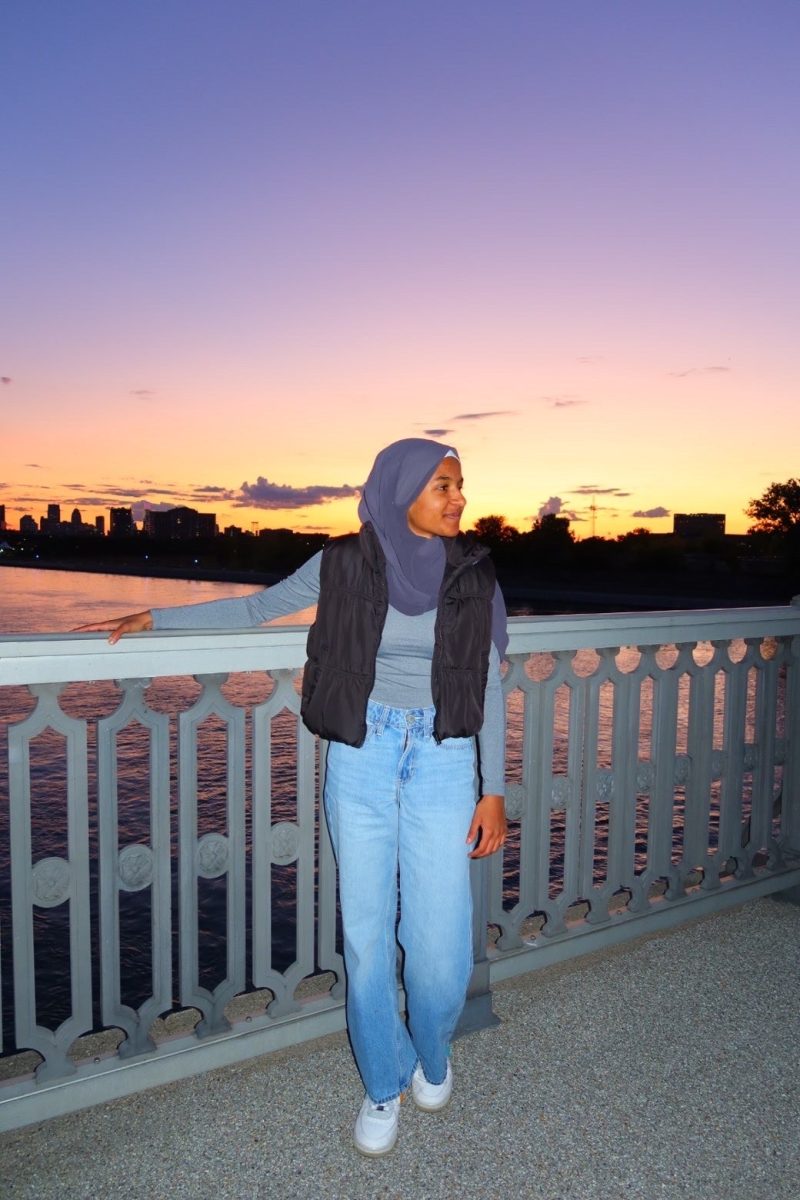
Shahed Saleem, a senior at Fraser High School, has family in Gaza and is familiar with what has been going on in the territory.
To further introduce Saleem, she provides insight on the history of this ongoing altercation.
“This genocide is not about religion, even though some people think it is. Both Islamic and Christian mosques/ churches have been hit. There is no hate towards jews. We don’t like Zionists, or those who support Israel’s movements. Hamas, which formed after Israel’s military occupation, consists of citizens choosing to fight back,” Saleem said.
Throughout this deep-rooted history of disagreements, Israeli forces have reportedly arrested Palestinians of all ages without charge, meaning men, women, and even children will be taken to prison with no end date in sight according to Saleem.
Dating back to one of the early disputes between Israel and Palestine, Israeli forces removed Palestinians from their homes as early as 1948. In this demonstration, Palestinians were under the impression that they would later return to their homes. Saleem reports that they did not bring any essential documents with them such as birth certificates, only small rations of food and clothes.
In this process, Palestinians– such as Saleem’s relatives– lost any and all documentation they had of their identity.
“Many people in our family, like my grandma or my other grandparents, either did not remember their birthday or made themselves a new birthday. This allowed them to identify themselves as old enough to attend school or go to work,” Saleem said, “And for many Palestinians, having a birthday of January 1st is common because they lack official birth documentation.”
Along with her older family members, younger generations continue to face the fallout of this conflict.
“One of my cousins was dragged out of his home in the dead of night,” Saleem said.
This occurred not too long ago, and the conflict has yet to die down.
“Israel forces forced themselves into his home, completely destroying everything in sight: the couches flipped upside down, shelves torn out, clothes thrown everywhere, then dragged him out beating him,” Saleem said , “Same thing with his older brother.”
Saleem recalls the horrifying treatment of not only her cousins in Palestine, but of her extended family who have lived through this conflict their entire lives.
“Another family member of mine got taken as a kid, he was tortured in unimaginable ways,” said Saleem, “One story he would tell us about his time in the torture prison was with rabid dogs. Israeli forces would let the dogs charge at him, attacking him, then throw him back in his cell. This repeated until he got released while he was in his 30s or 40s. To this day, he still has nightmares where he goes to his mom and says ‘the dogs are gonna come get us.’”
This is a direct reflection of what is going on in Palestine. Adults are left with PTSD from the events of their youth. Children grow up seeing violence and inequality, and the rest of the world watches but does little to intervene.
Shahed Saleem continues to grieve the mistreatment of her family in Palestine. She uses her voice both in-person and on social media to advocate for change in Gaza, but it will take more than just a few family members pushing for change.
There are many ways to push towards a better future for Palestinians, one of which being through direct links such as “GoFundMes.” If not, social media is a perfect place to push for progress and educate peers.
Nonetheless, Palestinians need support, so don’t be afraid to speak up and make a difference.